WONCA APR 2008 Melbourneより無事戻りました.
たくさんの刺激を貰い,アイデアを持って帰ってきました.
アジア太平洋地域は時差が少ないのでずいぶん楽です.
今日はまたいつもの日常にすぐに戻りましたが.アタらしく短期研修にくるひとが3人いて,スタッフのS医師が中心に研修の目標設定.
WONCAについては1参加者としてではなく,APR(Asia Pacific Region)の運営側の立場で参加した視点で少しずつ報告をしていきたいと思います.
まず最初.
学術集会の初日.開会式でWONCAのpresident Dr. van Weelよりプレゼンテーション.
メルボルンは1972年にWONCAが結成された地.そして前任のWONCA CEO Dr.Wes Fabbのhomeのために,しばらく事務局があった土地.
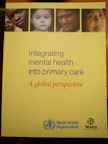
今回はWHOとの協働プロジェクトとして,メンタルヘルスをプライマリケアの診療にしっかりと統合していくことを重点に置きたいという話をされました.
Press Releaseはこちら
抜粋.
Integrate mental health better into primary care
Friday, 3 October 2008, 3:33 pm
Press Release: World Health Organisation
New report calls for mental health to be better integrated into primary care
Melbourne, 3 October 2008–The World Health Organization (WHO) and the World Organization of Family Doctors (Wonca) today released a joint report that aims to offer help to hundreds of millions of people who are affected by mental disorders but cannot receive the care and treatment they need.
The report "Integrating mental health in primary care - a global perspective" shows through detailed examples of best practices from 12 nations that, even though the current provision of mental health in primary care is still globally insufficient and unsatisfactory, integration can be successfully achieved in a variety of socio-economic contexts.
The report also outlines 10 broad principles to guide countries in their efforts to successfully integrate mental health into primary care. These principles have been derived from an in-depth analysis of the best practices, and range from clear policy directions and resource allocation at national level through to local-level commitment and capacity building on the ground.
関連するWHOのHPがこちら
Mental health Improvements for Nations Development: The WHO MIND Projectそして,レポートそのものがここ.
New joint WHO/Wonca report 'Integrating mental health into primary care - a global perspective'[pdf 4.03Mb]当日はDe. van Weelにつづいて,今回の報告書のWHOがわの統括のDr. Michelle Funkも檀上にあがりその重要性を話していました.
reportの本文は是非Part1とPart2のイントロまでは目を通してほしいのですが,(残りは各国の工夫や成功事例)エッセンスだけ.
Part1のChapter2
Seven good reasons for integrating mental health into primary care
1. The burden of mental disorders is great
2. Mental and physical health problems are interwoven
3. The treatment gap for mental disorders is enormous
4. Primary care for mental health enhances access
5. Primary care for mental health promotes respect of human rights
6. Primary care for mental health is affordable and cost effective
7. Primary care for mental health generates good health outcomes
我々にとっては当たり前の話ですね.
その中で印象的だったのは,Dr. van Weelがプレゼンで用いた一枚の図.いわゆる我々の世界では前提となる
Whiteのdiagram (もしくはGreenのdiagram,ecology of careとも呼ばれています.1000人が1ヶ月の間にどのぐらい病気になるか,専門医にかかるか,入院するか,といった統計.)
のmental healthに限定したバージョンの図.
図は引用できませんが,その元となる文献を.(以下のリンクのどれでもみれます.Dr. van Weel自身の関わった研究であるところがみそ)
http://cat.inist.fr/?aModele=afficheN&cpsidt=18383208
http://www.ncbi.nlm.nih.gov/pubmed/17256447
http://www.websciences.org/cftemplate/NAPS/archives/indiv.cfm?ID=20064890
Int J Clin Pharmacol Ther. 2007 Jan;45(1):23-9.
Treatment of mental health problems in general practice : a survey of psychotropics prescribed and other treatments provided
VAN RIJSWIJK E. ; BORGHUIS M. ; VAN DE LISDONK E. ; ZITMAN F. ; VAN WEEL C. ;
Objective: Real-life data on the treatment of patients with mental health problems are important as a reference to evaluate care and benchmarking. This study describes the treatment of mental health problems in general practice as diagnosed by general practitioners (GP). Material and methods: Data on mental health problems were available from structured psychiatric interviews in the general population and data on mental health problems diagnosed by general practitioners. Pharmacological and non-pharmacological treatment data were taken from patients records held electronically in general practices. Results: GPs diagnosed a mental health problem in 13.2% of the 1,756 cases examined and 86% of these patients were treated by the GPs themselves. Of the 16% referrals, the majority were referred within primary care. Nearly all patients with a mental health problem received counseling or advice from their GP. Half of the patients with a medication-related disorder, a (single) mood disorder or an (single) anxiety disorder and all patients with a combined anxiety and depressive disorder received a prescription for psychotropic drugs (antidepressants and/or benzodiazepines). Nearly all patients with a sleep disorder received a prescription for benzodiazepine. In patients with psychosocial problems, 20% received benzodiazepines. Conclusion: The majority of mental health problems, when professionally treated, are treated in primary care. More than half the patients are treated with antidepressants and/or benzodiazepines. Most patients also receive supportive counseling or advice.
Revue / Journal Title
International journal of clinical pharmacology and therapeutics ISSN 0946-1965
Source / Source
2007, vol. 45, no1, pp. 23-29 [7 page(s) (article)]
GPの診療で13.6%がメンタルヘルスの問題で,そのうち86%がGPにより治療される.abstractには書いていませんが,その約半分は何らかのカウンセリングのみで,残りがカウンセリング+投薬とのこと.本文に立ち返って読む必要があります.
WHOのreportに戻ります.Dr. Funkも強調し,reportの中でも強調されている,
10 principles for integrating mental health into primary care
1. Policy and plans need to incorporate primary care for mental health.
2. Advocacy is required to shift attitudes and behaviour.
3. Adequate training of primary care workers is required.
4. Primary care tasks must be limited and doable.
5. Specialist mental health professionals and facilities must be available to
support primary care.
6. Patients must have access to essential psychotropic medications in primary care.
7. Integration is a process, not an event.
8. A mental health service coordinator is crucial.
9. Collaboration with other government non-health sectors, nongovernmental
organizations, village and community health workers, and volunteers is required.
10. Financial and human resources are needed.
当たり前のことばかりですが,その中でもさらにDr. Funkは
7. Integration is a process, not an event.
ということを強調していました.
統合は一夜にして生じない.過程である.
いい言葉ですね.
これらの中でも我々のできることはまだまだありそうです.
8. A mental health service coordinator is crucial.
PSW (psychiatric social worker)という職種があることをどのぐらいのプライマリケア医が知っているでしょう.また自分の地域にいるのか,どうやって連絡を取ればいいのか.を把握しているでしょうか.
またこの報告書の付録には
Suggested functions that general practice physician trainees should be able to
perform before graduation
といった研修到達目標
• Serve as the first point of contact with the health care system for all patients, regardless of age or sex.
• Use a patient-centred approach, oriented to the individual, his/her family, and
the community.
• Use a biopsychosocial approach to understand and manage health problems.
• Identify health problems at an early stage where possible.
• Manage both acute and chronic health problems of individual patients.
• Provide care that is coordinated over time and determined by the needs of
the patient.
• Use health care resources efficiently through coordinating care, collaborating
with other primary care workers, and managing interfaces with medical specialists.
• Undertake health promotion with individual patients and communities.
• Provide population-based care, by considering the health needs of the local
population and undertaking interventions to reduce risks or improve quality of
life in specified groups.
英国での紹介のタイミング
Summarized guidelines for referring adults and children to secondary mental
health services, United Kingdom
(コレは引用しません)
等様々なリソースが含まれています.
あとは,こういった世界レベルの取り組みが,減衰することなく,国,行政,病院,医師レベルまで下りてくるか.ということです.うちのプログラムでも早速取り組んでいきたいと思います.
その他のWONCA報告は少しずつ.

 投稿
投稿